12 Hidden Regelbau Bunkers That Reveal the Atlantic Wall’s Real Design

Atlantic Wall · German military architecture · 1939–1945

12 Hidden Regelbau Bunkers That Reveal the Atlantic Wall’s Real Design

Not every German coastal bunker held a gun. Some housed twenty soldiers, others coordinated artillery fire, treated casualties, stored naval ammunition or helped radar operators direct night fighters. These twelve designs expose the specialist architecture behind the Atlantic Wall.

A model-by-model guide to purpose, layout, equipment and surviving examples
12 designsArmy, Luftwaffe and Kriegsmarine types
96 indexed photosEight unique tagged images for each bunker type
3 servicesDifferent missions inside one coastal defence system

The Atlantic Wall is often pictured as a line of massive concrete gun casemates. That image is incomplete. A defended coastal sector needed accommodation, observation, command, communications, medical support, power, radar and ammunition as much as it needed weapons. The German Regelbau system supplied standardised designs for many of these different tasks. Their numbers and prefixes can look like a technical code, but each plan was built around a specific military problem.

How the photographs were selected: the uploaded JSON contains 5,582 image records. This post uses 96 different image URLs and pin IDs: eight records for each of the twelve selected model labels. The type field is treated as the collection’s classification, not as independent proof of a photograph’s exact site, date or original photographer. Each picture links to its matching Pinterest pin; the original photographer and licence were not supplied in the index.
01 · Heer · personnel shelter

Regelbau 621: the ten-man group shelter

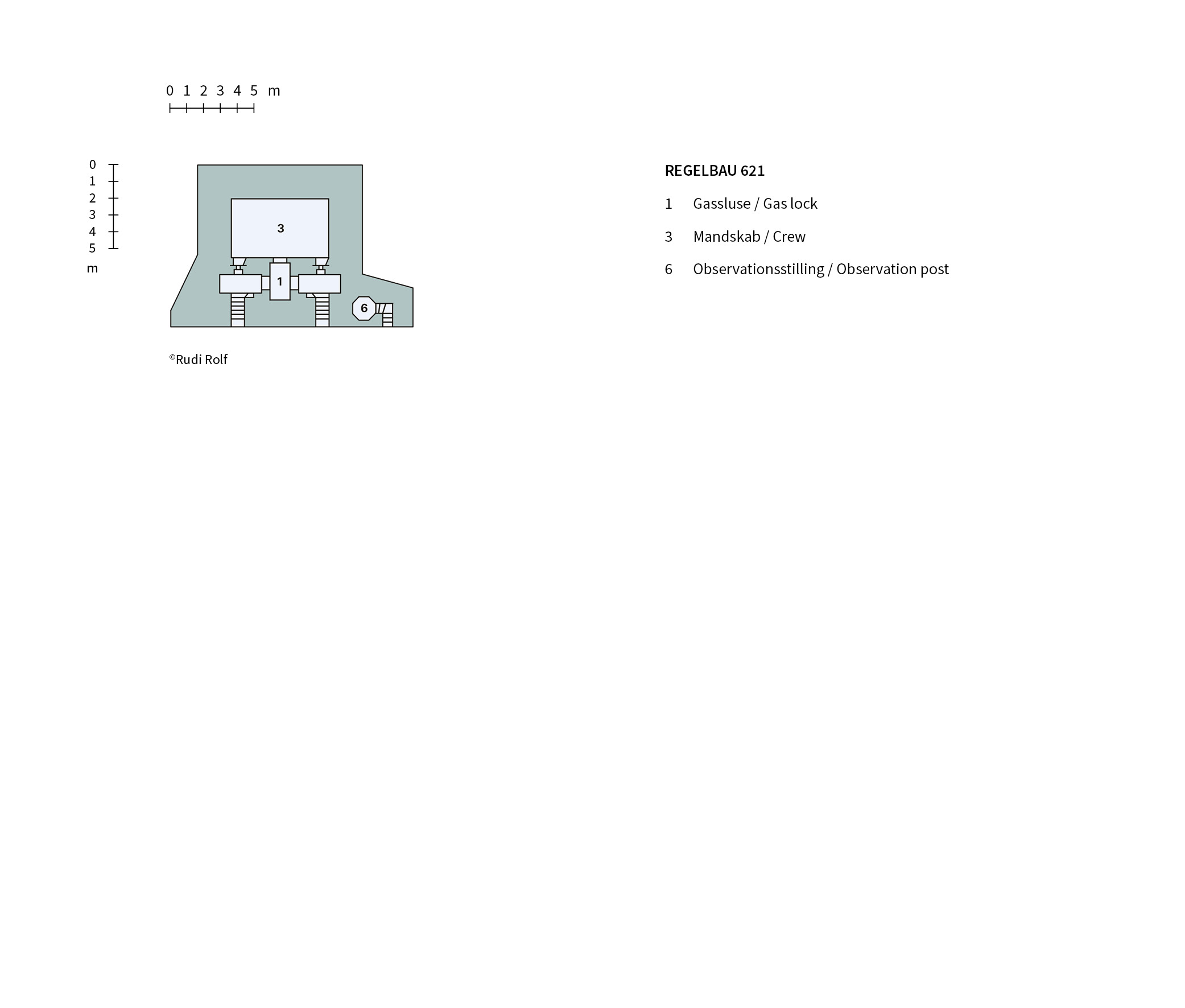
Regelbau 621, known in German as Gruppenunterstand für 10 Mann, was a permanent Army shelter for a group of ten soldiers. Its role was to protect the men who manned nearby fighting positions, observation posts or the wider strongpoint. It was not, by itself, a coastal gun casemate. The design was part of the late-1942 standardisation drive, and the Dutch National Archives’ Bunkerarchief inventory lists a substantial set of 621 construction records dated 1942–1944. Those records include formwork plans, beam plans, reinforcement drawings, ventilation plans and plans for wall penetrations, cables and electrical installations. [1]

The basic architectural idea was a protected crew space reached through an entrance sequence that reduced the direct path of blast and fragments. A gas lock separated the exterior from the occupied interior; ventilation and electrical arrangements were part of the design rather than afterthoughts. A plan reproduced by the Atlantvolden project also identifies an observation position in the 621 arrangement. In practice, local adaptations could alter entrance details, niches, external observation arrangements or the number of bunks actually installed.

A well-documented example is the 621 at Pointe de Bloscon, Roscoff, in Brittany. The French regional heritage inventory identifies it as a ten-man shelter and connects the surviving work to the post-war Pinczon du Sel survey of Atlantic Wall installations. The inventory also warns that its measured footprint includes the observation and firing post, a useful reminder that a real site may contain features not obvious from the generic plan. [4]

The 621’s strategic value was simple but essential: it allowed a small group to remain under cover close to the sector it had to defend. The shelter supported endurance and readiness; the weapons and observation tasks were normally carried out from the positions connected to it.

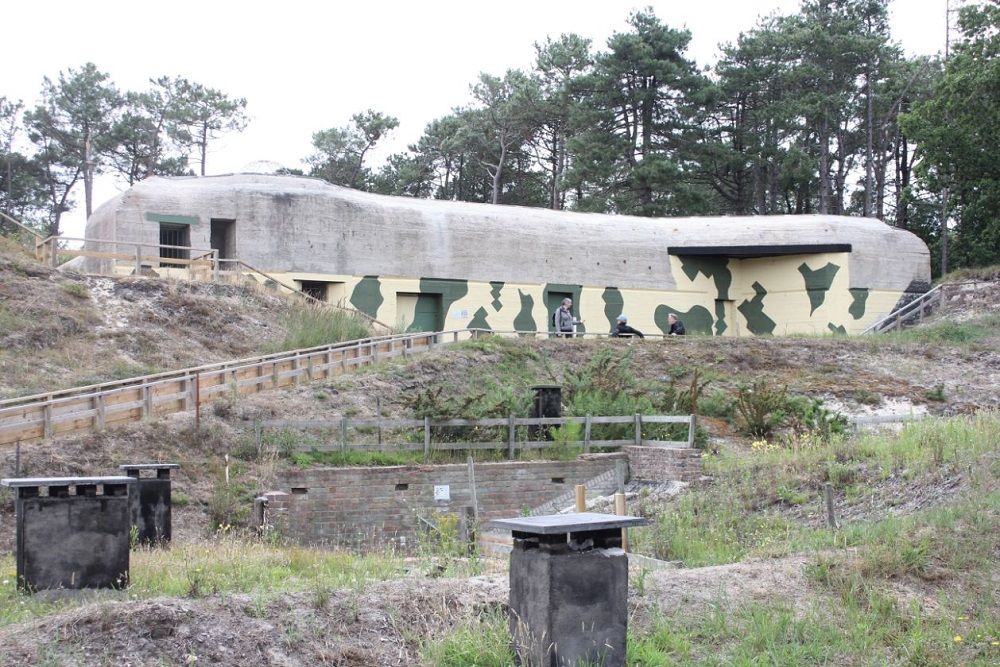
World War II German Regelbau 621 bunker photograph, image indexed under this Regelbau designation; exact location and date are not supplied.
Regelbau 621 · image 01. The supplied index gives this type label but does not record the original photographer, date or site. View pin ↗
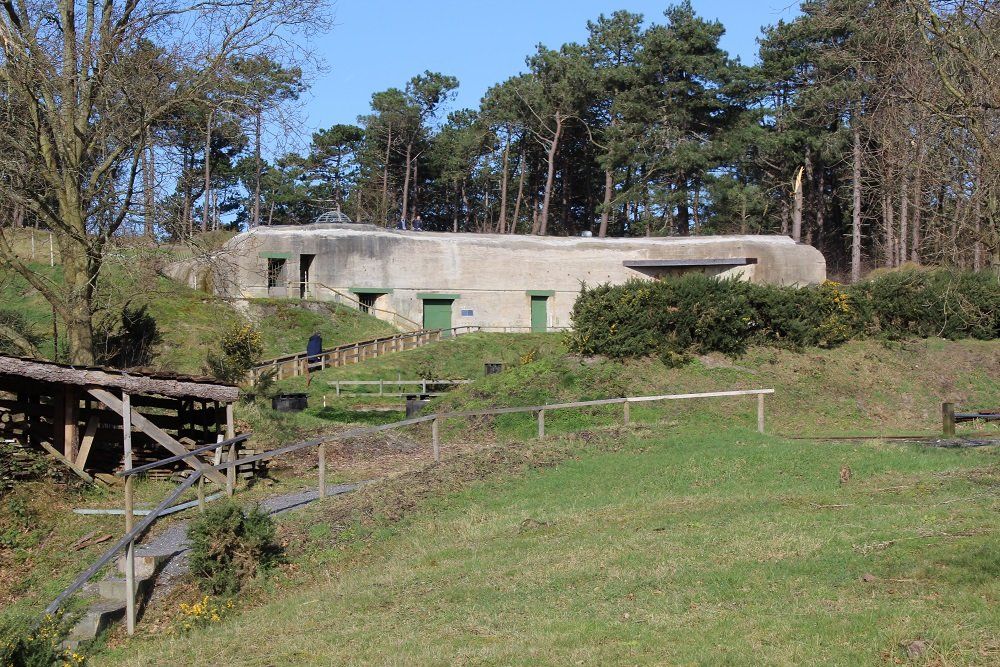
World War II German Regelbau 621 bunker photograph, image indexed under this Regelbau designation; exact location and date are not supplied.
Regelbau 621 · image 02. The supplied index gives this type label but does not record the original photographer, date or site. View pin ↗
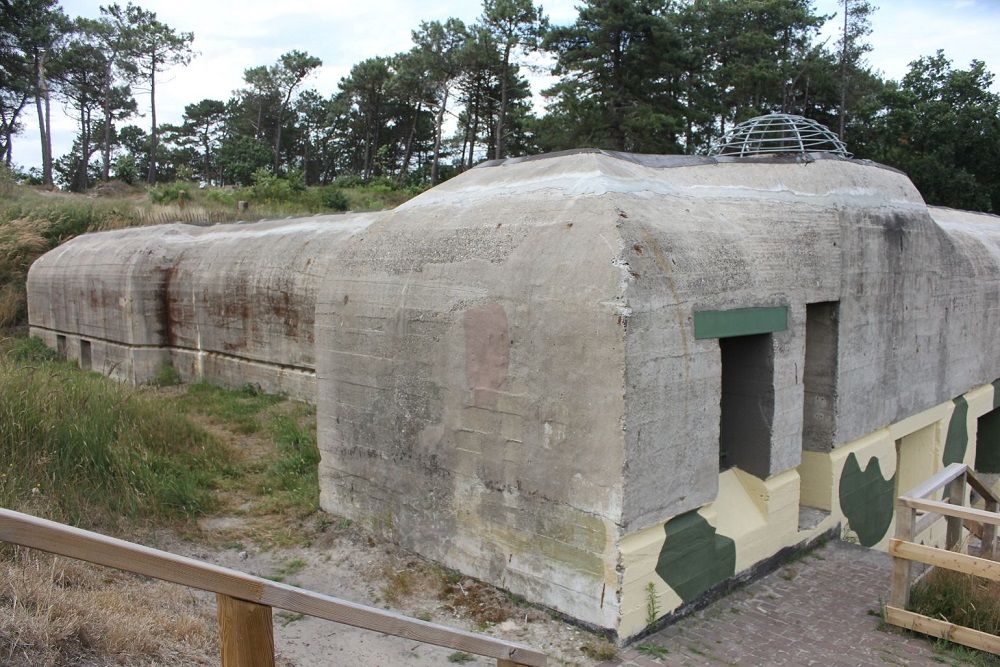
World War II German Regelbau 621 bunker photograph, image indexed under this Regelbau designation; exact location and date are not supplied.
Regelbau 621 · image 03. The supplied index gives this type label but does not record the original photographer, date or site. View pin ↗
World War II German Regelbau 621 bunker photograph, image indexed under this Regelbau designation; exact location and date are not supplied.
Regelbau 621 · image 04. The supplied index gives this type label but does not record the original photographer, date or site. View pin ↗
World War II German Regelbau 621 bunker photograph, image indexed under this Regelbau designation; exact location and date are not supplied.
Regelbau 621 · image 05. The supplied index gives this type label but does not record the original photographer, date or site. View pin ↗
World War II German Regelbau 621 bunker photograph, image indexed under this Regelbau designation; exact location and date are not supplied.
Regelbau 621 · image 06. The supplied index gives this type label but does not record the original photographer, date or site. View pin ↗
World War II German Regelbau 621 bunker photograph, image indexed under this Regelbau designation; exact location and date are not supplied.
Regelbau 621 · image 07. The supplied index gives this type label but does not record the original photographer, date or site. View pin ↗
World War II German Regelbau 621 bunker photograph, image indexed under this Regelbau designation; exact location and date are not supplied.
Regelbau 621 · image 08. The supplied index gives this type label but does not record the original photographer, date or site. View pin ↗
Plan and cross-section of a German Regelbau 621 ten-person group shelter, reproduced by the Atlantvolden project
Type-plan illustration reproduced by the Atlantvolden project for the Løkken-Nord site. This is a technical drawing, not one of the eight collection photographs. Source and site context ↗
02 · Heer · personnel shelter

Regelbau 622: the twenty-man double group shelter

Regelbau 622, Doppelgruppenunterstand für 20 Mann, expanded the personnel-shelter concept to twenty soldiers. It was one of the most characteristic accommodation types found in Atlantic Wall strongpoints. The doubled capacity did not make it a fighting bunker: it was designed to keep a larger group protected and available near the defensive positions that they were expected to man.

The surviving plans reveal more than a thick concrete shell. The National Archives’ Bunkerarchief lists an equipment plan and construction drawings from 1942–1943, together with beam, reinforcement, ventilation, cable and electrical-installation plans. [1] A local history of the Agger strongpoint describes the standard 622 as a twenty-man accommodation bunker with bunks, ventilation and iron stoves. Seven were erected at Agger, making the type the most common Regelbau design in that particular position. The same local account records that the buildings were constructed as part of the expansion of the strongpoint during 1943. [2]

The 622 could appear with local variations. A heritage record for a 622 in the former Stützpunktgruppe Moerdijk describes a double-group shelter of roughly thirteen by twelve metres and notes a built-in Tobruk position on that example. It also records a non-standard placement of the Tobruk on the left side. That is evidence of a local variant, not a feature that should be assumed on every 622. [5]

Its military importance was logistical as much as defensive. A garrison needed sleep, shelter, heating, ventilation and a protected place to wait between watches. The 622 provided that support inside the defended area, reducing the need to place the whole group in exposed field accommodation.

World War II German Regelbau 622 bunker photograph, image indexed under this Regelbau designation; exact location and date are not supplied.
Regelbau 622 · image 01. The supplied index gives this type label but does not record the original photographer, date or site. View pin ↗
World War II German Regelbau 622 bunker photograph, image indexed under this Regelbau designation; exact location and date are not supplied.
Regelbau 622 · image 02. The supplied index gives this type label but does not record the original photographer, date or site. View pin ↗
World War II German Regelbau 622 bunker photograph, image indexed under this Regelbau designation; exact location and date are not supplied.
Regelbau 622 · image 03. The supplied index gives this type label but does not record the original photographer, date or site. View pin ↗
World War II German Regelbau 622 bunker photograph, image indexed under this Regelbau designation; exact location and date are not supplied.
Regelbau 622 · image 04. The supplied index gives this type label but does not record the original photographer, date or site. View pin ↗
World War II German Regelbau 622 bunker photograph, image indexed under this Regelbau designation; exact location and date are not supplied.
Regelbau 622 · image 05. The supplied index gives this type label but does not record the original photographer, date or site. View pin ↗
World War II German Regelbau 622 bunker photograph, image indexed under this Regelbau designation; exact location and date are not supplied.
Regelbau 622 · image 06. The supplied index gives this type label but does not record the original photographer, date or site. View pin ↗
World War II German Regelbau 622 bunker photograph, image indexed under this Regelbau designation; exact location and date are not supplied.
Regelbau 622 · image 07. The supplied index gives this type label but does not record the original photographer, date or site. View pin ↗
World War II German Regelbau 622 bunker photograph, image indexed under this Regelbau designation; exact location and date are not supplied.
Regelbau 622 · image 08. The supplied index gives this type label but does not record the original photographer, date or site. View pin ↗
03 · Heer · armoured infantry position

Regelbau 634: six embrasures beneath an armoured turret

Regelbau 634 was a combat bunker built around a six-embrasure armoured turret, described in German as Stand mit 6-Schartenturm. Its most distinctive architectural feature was not a broad sea-facing gun embrasure but a compact armoured cupola with multiple narrow firing and observation openings. The arrangement allowed the position to cover several directions while keeping much of the crew and the working space below the exposed surface.

The local history of the Agger defences gives a rare, site-specific account of a 634 in the town’s “hedgehog” strongpoint. It describes a cupola with six firing slits, two machine guns and the ability to cover the surrounding horizon. The account gives the armour thickness of that Agger cupola as 25 centimetres and explains how the openings could be closed with heavy shutters when not in use. These details belong to the documented Agger example and should not be applied automatically to every turret or surviving 634. [2]

The bunker’s tactical purpose was local defence. A machine-gun turret could sweep approaches and protect positions that were difficult to cover from a single fixed embrasure. Its low profile and armoured cupola made the observation and firing apparatus less exposed than an open weapon pit. The concrete body protected the crew and connected the turret to the access and internal rooms.

At Agger, the 634 was integrated into a wider position that also contained troop shelters, mortars, observation bunkers and other fighting works. It therefore makes most sense as one element in a mutually supporting strongpoint, not as an isolated fortress. The local archive’s description is valuable precisely because it documents a particular operational context rather than treating every 634 as identical.

World War II German Regelbau 634 bunker photograph, image indexed under this Regelbau designation; exact location and date are not supplied.
Regelbau 634 · image 01. The supplied index gives this type label but does not record the original photographer, date or site. View pin ↗
World War II German Regelbau 634 bunker photograph, image indexed under this Regelbau designation; exact location and date are not supplied.
Regelbau 634 · image 02. The supplied index gives this type label but does not record the original photographer, date or site. View pin ↗
World War II German Regelbau 634 bunker photograph, image indexed under this Regelbau designation; exact location and date are not supplied.
Regelbau 634 · image 03. The supplied index gives this type label but does not record the original photographer, date or site. View pin ↗
World War II German Regelbau 634 bunker photograph, image indexed under this Regelbau designation; exact location and date are not supplied.
Regelbau 634 · image 04. The supplied index gives this type label but does not record the original photographer, date or site. View pin ↗
World War II German Regelbau 634 bunker photograph, image indexed under this Regelbau designation; exact location and date are not supplied.
Regelbau 634 · image 05. The supplied index gives this type label but does not record the original photographer, date or site. View pin ↗
World War II German Regelbau 634 bunker photograph, image indexed under this Regelbau designation; exact location and date are not supplied.
Regelbau 634 · image 06. The supplied index gives this type label but does not record the original photographer, date or site. View pin ↗
World War II German Regelbau 634 bunker photograph, image indexed under this Regelbau designation; exact location and date are not supplied.
Regelbau 634 · image 07. The supplied index gives this type label but does not record the original photographer, date or site. View pin ↗
World War II German Regelbau 634 bunker photograph, image indexed under this Regelbau designation; exact location and date are not supplied.
Regelbau 634 · image 08. The supplied index gives this type label but does not record the original photographer, date or site. View pin ↗
04 · Heer · command and fire control

Regelbau 636: the command post that connected the guns

Regelbau 636 was a command post for an Army coastal battery: Befehlsstand für Heeres-Küsten Batterie. It was built to coordinate the battery rather than to house its main artillery weapon. In a coastal battery, guns could only work effectively when their crews received target information, orders and corrections from an observation and fire-control system. The 636 provided a protected place for that information to be handled and distributed.

The recorded room schedule for this model includes a gas lock, crew accommodation, radio room, heating room, observation room, computing room and communications room, together with an emergency exit. That combination shows its role as a working headquarters: observers watched the sea, calculations translated observations into firing information, radio and communications connected the command post to the battery, and the crew kept the system operating. [10]

The National Archives’ Bunkerarchief separately records the 636 construction documentation from 1943–1944, including formwork, ventilation, wall penetrations and cable plans, plus the KS 41 heating, ventilation and bed-installation plan. This is useful evidence that the command post was a technical workplace with planned services and internal fittings, not simply a large empty shelter. [1]

A documented Danish context is the Blåvand coastal battery, where the battery command arrangements were associated with Regelbau 636 and a group of 105 mm guns. The local site history distinguishes the command bunker from the gun bunkers and ammunition and anti-aircraft works elsewhere in the position. [8] That distinction matters: the effectiveness of the battery depended on the links between its separate structures.

World War II German Regelbau 636 bunker photograph, image indexed under this Regelbau designation; exact location and date are not supplied.
Regelbau 636 · image 01. The supplied index gives this type label but does not record the original photographer, date or site. View pin ↗
World War II German Regelbau 636 bunker photograph, image indexed under this Regelbau designation; exact location and date are not supplied.
Regelbau 636 · image 02. The supplied index gives this type label but does not record the original photographer, date or site. View pin ↗
World War II German Regelbau 636 bunker photograph, image indexed under this Regelbau designation; exact location and date are not supplied.
Regelbau 636 · image 03. The supplied index gives this type label but does not record the original photographer, date or site. View pin ↗
World War II German Regelbau 636 bunker photograph, image indexed under this Regelbau designation; exact location and date are not supplied.
Regelbau 636 · image 04. The supplied index gives this type label but does not record the original photographer, date or site. View pin ↗
World War II German Regelbau 636 bunker photograph, image indexed under this Regelbau designation; exact location and date are not supplied.
Regelbau 636 · image 05. The supplied index gives this type label but does not record the original photographer, date or site. View pin ↗
World War II German Regelbau 636 bunker photograph, image indexed under this Regelbau designation; exact location and date are not supplied.
Regelbau 636 · image 06. The supplied index gives this type label but does not record the original photographer, date or site. View pin ↗
World War II German Regelbau 636 bunker photograph, image indexed under this Regelbau designation; exact location and date are not supplied.
Regelbau 636 · image 07. The supplied index gives this type label but does not record the original photographer, date or site. View pin ↗
World War II German Regelbau 636 bunker photograph, image indexed under this Regelbau designation; exact location and date are not supplied.
Regelbau 636 · image 08. The supplied index gives this type label but does not record the original photographer, date or site. View pin ↗
05 · Heer · medical support

Regelbau 639: a large medical dressing station

Regelbau 639 was a Großer Sanitätsunterstand, a large medical dressing station. Its function was medical support within the defended area, not direct combat. A coastal strongpoint exposed its garrison to blast injuries, fragments, burns and other trauma. A protected dressing station gave medical personnel a place to receive casualties, assess wounds and provide initial treatment before a casualty could be moved to a larger medical facility or evacuation route.

The specialist technical register classifies the 639 as an Army design in the medical-bunker group and records accommodation for a small medical crew. [10] That staffing detail is not the same as a patient capacity. The designation “large” distinguishes the design within the medical-support family; it does not establish that every casualty could be treated there or that the bunker functioned as a full field hospital.

Its architecture had to balance protection with practical movement. Medical work requires access, space for personnel and equipment, and a workable route for casualties. However, the sources consulted for this article do not provide a sufficiently verified room-by-room plan to assign exact names or dimensions to every interior compartment. For that reason, the layout is not reconstructed from assumptions. The model should be identified by its documented medical role unless a surviving example can be matched to an original drawing.

The 639 is an important reminder that the Atlantic Wall was an occupied military landscape with a support system behind its weapons. The medical function was part of the fortification programme even though it did not contribute firepower.

World War II German Regelbau 639 bunker photograph, image indexed under this Regelbau designation; exact location and date are not supplied.
Regelbau 639 · image 01. The supplied index gives this type label but does not record the original photographer, date or site. View pin ↗
World War II German Regelbau 639 bunker photograph, image indexed under this Regelbau designation; exact location and date are not supplied.
Regelbau 639 · image 02. The supplied index gives this type label but does not record the original photographer, date or site. View pin ↗
World War II German Regelbau 639 bunker photograph, image indexed under this Regelbau designation; exact location and date are not supplied.
Regelbau 639 · image 03. The supplied index gives this type label but does not record the original photographer, date or site. View pin ↗
World War II German Regelbau 639 bunker photograph, image indexed under this Regelbau designation; exact location and date are not supplied.
Regelbau 639 · image 04. The supplied index gives this type label but does not record the original photographer, date or site. View pin ↗
World War II German Regelbau 639 bunker photograph, image indexed under this Regelbau designation; exact location and date are not supplied.
Regelbau 639 · image 05. The supplied index gives this type label but does not record the original photographer, date or site. View pin ↗
World War II German Regelbau 639 bunker photograph, image indexed under this Regelbau designation; exact location and date are not supplied.
Regelbau 639 · image 06. The supplied index gives this type label but does not record the original photographer, date or site. View pin ↗
World War II German Regelbau 639 bunker photograph, image indexed under this Regelbau designation; exact location and date are not supplied.
Regelbau 639 · image 07. The supplied index gives this type label but does not record the original photographer, date or site. View pin ↗
World War II German Regelbau 639 bunker photograph, image indexed under this Regelbau designation; exact location and date are not supplied.
Regelbau 639 · image 08. The supplied index gives this type label but does not record the original photographer, date or site. View pin ↗

Video reference: Regelbau 639. This video is included because the supplied collection labels it as a 639 example. Its exact location, date and individual interior details should be checked against the footage and site records before being used as a specific identification.

06 · Heer · observation

Regelbau 666: the infantry observation bunker with a small cupola

Regelbau 666 was an infantry observation post with a small armoured observation cupola, referred to in the type designation as a Kleinstglocke. The plan combines an entrance and gas-lock sequence with an observation position, an armoured observation point, a plotting room and an emergency exit. In contrast to the 634, whose six-embrasure turret was intended for close defence with weapons, the central purpose of the 666 was to observe and report what was happening outside the strongpoint.

The Agger local-history study gives an unusually vivid description of the type in service. Two 666 bunkers were placed at the dike and at the northern edge of the position, where an attack was considered more likely. Grass sods were laid over the cupola in strips to disguise its outline without covering the observation slits, and an opening at the top allowed a periscope to be used. The article identifies these as details of the Agger observations positions and links their field of view to the surrounding defences. [2]

The same study explains that the strongpoint contained several different bunker functions: 622 and 668 accommodation shelters, a 610 command bunker, 607 ammunition shelters and other positions. In this context, the 666 helped the defenders see and report movement so the rest of the strongpoint could respond. The observation bunker was therefore a sensor and information point within the infantry defence, not a self-contained coastal battery.

Its compact armoured cupola was the key feature. It offered a protected observation point while the lower concrete body held the supporting rooms. When identifying a surviving example, the cupola, viewing openings, periscope provision and relationship to the defended terrain are more useful clues than the overall silhouette alone.

World War II German Regelbau 666 bunker photograph, image indexed under this Regelbau designation; exact location and date are not supplied.
Regelbau 666 · image 01. The supplied index gives this type label but does not record the original photographer, date or site. View pin ↗
World War II German Regelbau 666 bunker photograph, image indexed under this Regelbau designation; exact location and date are not supplied.
Regelbau 666 · image 02. The supplied index gives this type label but does not record the original photographer, date or site. View pin ↗
World War II German Regelbau 666 bunker photograph, image indexed under this Regelbau designation; exact location and date are not supplied.
Regelbau 666 · image 03. The supplied index gives this type label but does not record the original photographer, date or site. View pin ↗
World War II German Regelbau 666 bunker photograph, image indexed under this Regelbau designation; exact location and date are not supplied.
Regelbau 666 · image 04. The supplied index gives this type label but does not record the original photographer, date or site. View pin ↗
World War II German Regelbau 666 bunker photograph, image indexed under this Regelbau designation; exact location and date are not supplied.
Regelbau 666 · image 05. The supplied index gives this type label but does not record the original photographer, date or site. View pin ↗
World War II German Regelbau 666 bunker photograph, image indexed under this Regelbau designation; exact location and date are not supplied.
Regelbau 666 · image 06. The supplied index gives this type label but does not record the original photographer, date or site. View pin ↗
World War II German Regelbau 666 bunker photograph, image indexed under this Regelbau designation; exact location and date are not supplied.
Regelbau 666 · image 07. The supplied index gives this type label but does not record the original photographer, date or site. View pin ↗
World War II German Regelbau 666 bunker photograph, image indexed under this Regelbau designation; exact location and date are not supplied.
Regelbau 666 · image 08. The supplied index gives this type label but does not record the original photographer, date or site. View pin ↗

Video reference: Regelbau 666. The supplied video collection labels this clip as a 666 example. It is included as a type-specific visual reference, not as independent verification of a particular site or original wartime fitting.

07 · Luftwaffe · searchlight support

Regelbau L411A: the shelter for a 60 cm anti-aircraft searchlight

The L411A belonged to the Luftwaffe’s specialised L-series and was designated Unterstand für Flakscheinwerfer 60 cm: a shelter associated with a 60-centimetre anti-aircraft searchlight. It should not be confused with a conventional anti-aircraft gun casemate. The searchlight’s job was to illuminate aircraft or parts of the sky at night, supporting visual identification and the work of nearby anti-aircraft units.

The German Fortifications database lists the L411A as a bunker for a 60 cm anti-aircraft searchlight, while the specialist Luftwaffe overview groups the 400-series designs into roles that include searchlight emplacements, machinery bunkers, crew shelters and command posts. [10][11] The distinction between a searchlight shelter and the weapon position is important: the light, its power arrangements and its crew were part of a larger air-defence installation, but the bunker designation alone does not prove that every surviving example retains its original equipment.

Architecturally, the L411A belongs to the support infrastructure of a night-defence system. A protected, accessible space was needed for the searchlight and its associated equipment; openings, access and the relationship with the light’s operating position could vary with the terrain and local installation. The evidence does not justify treating every L411A as identical in its external fittings or in the way the searchlight was deployed.

Its strategic significance lay in extending the defensive system into darkness. Searchlights did not replace radar, observers or anti-aircraft guns. They provided another layer of detection and illumination that could help crews acquire a target under night conditions.

World War II German RegeLbau L411a bunker photograph, image indexed under this Regelbau designation; exact location and date are not supplied.
RegeLbau L411a · image 01. The supplied index gives this type label but does not record the original photographer, date or site. View pin ↗
World War II German RegeLbau L411a bunker photograph, image indexed under this Regelbau designation; exact location and date are not supplied.
RegeLbau L411a · image 02. The supplied index gives this type label but does not record the original photographer, date or site. View pin ↗
World War II German RegeLbau L411a bunker photograph, image indexed under this Regelbau designation; exact location and date are not supplied.
RegeLbau L411a · image 03. The supplied index gives this type label but does not record the original photographer, date or site. View pin ↗
World War II German RegeLbau L411a bunker photograph, image indexed under this Regelbau designation; exact location and date are not supplied.
RegeLbau L411a · image 04. The supplied index gives this type label but does not record the original photographer, date or site. View pin ↗
World War II German RegeLbau L411a bunker photograph, image indexed under this Regelbau designation; exact location and date are not supplied.
RegeLbau L411a · image 05. The supplied index gives this type label but does not record the original photographer, date or site. View pin ↗
World War II German RegeLbau L411a bunker photograph, image indexed under this Regelbau designation; exact location and date are not supplied.
RegeLbau L411a · image 06. The supplied index gives this type label but does not record the original photographer, date or site. View pin ↗
World War II German RegeLbau L411a bunker photograph, image indexed under this Regelbau designation; exact location and date are not supplied.
RegeLbau L411a · image 07. The supplied index gives this type label but does not record the original photographer, date or site. View pin ↗
World War II German RegeLbau L411a bunker photograph, image indexed under this Regelbau designation; exact location and date are not supplied.
RegeLbau L411a · image 08. The supplied index gives this type label but does not record the original photographer, date or site. View pin ↗
08 · Luftwaffe · radar

Regelbau L480: the concrete shelter for Wassermann S radar

Regelbau L480 was designed as an Unterstand für Wassermann S, a shelter for the Wassermann S radar system. It was part of the Luftwaffe’s communications and radar-related architecture rather than a gun emplacement. The long-range radar role was to provide information about aircraft activity over a broad area; that information only became useful when it could be passed to control and reporting centres and integrated with other warning sources.

The German Fortifications database identifies L480 as a radar bunker for the Wassermann S set. The Luftwaffe model listing places the L479–L494 group among radio, command and radar/communications structures, distinguishing them from the L401–L470 flak and searchlight-related family. [10][11] That classification helps avoid a common mistake: a radar bunker could be essential to air defence without housing an anti-aircraft gun.

The building should be read as the protected support structure for a technical installation. The antenna and associated equipment formed part of a wider radar site; the bunker itself provided a protected environment for the installation’s personnel and systems. The precise arrangement above ground, and which Wassermann variant was present at an individual site, should be established from site documentation rather than inferred from the designation alone.

Within the Atlantic Wall landscape, radar positions were not merely coastal fortifications. They connected the coast to a broader air-warning network and to the Luftwaffe’s operational command structure. L480 represents the concrete architecture behind that electronic layer of defence.

World War II German RegeLbau L480 bunker photograph, image indexed under this Regelbau designation; exact location and date are not supplied.
RegeLbau L480 · image 01. The supplied index gives this type label but does not record the original photographer, date or site. View pin ↗
World War II German RegeLbau L480 bunker photograph, image indexed under this Regelbau designation; exact location and date are not supplied.
RegeLbau L480 · image 02. The supplied index gives this type label but does not record the original photographer, date or site. View pin ↗
World War II German RegeLbau L480 bunker photograph, image indexed under this Regelbau designation; exact location and date are not supplied.
RegeLbau L480 · image 03. The supplied index gives this type label but does not record the original photographer, date or site. View pin ↗
World War II German RegeLbau L480 bunker photograph, image indexed under this Regelbau designation; exact location and date are not supplied.
RegeLbau L480 · image 04. The supplied index gives this type label but does not record the original photographer, date or site. View pin ↗
World War II German RegeLbau L480 bunker photograph, image indexed under this Regelbau designation; exact location and date are not supplied.
RegeLbau L480 · image 05. The supplied index gives this type label but does not record the original photographer, date or site. View pin ↗
World War II German RegeLbau L480 bunker photograph, image indexed under this Regelbau designation; exact location and date are not supplied.
RegeLbau L480 · image 06. The supplied index gives this type label but does not record the original photographer, date or site. View pin ↗
World War II German RegeLbau L480 bunker photograph, image indexed under this Regelbau designation; exact location and date are not supplied.
RegeLbau L480 · image 07. The supplied index gives this type label but does not record the original photographer, date or site. View pin ↗
World War II German RegeLbau L480 bunker photograph, image indexed under this Regelbau designation; exact location and date are not supplied.
RegeLbau L480 · image 08. The supplied index gives this type label but does not record the original photographer, date or site. View pin ↗

Video reference: Regelbau L480. The supplied video list identifies the clip as an L480 example. Its role here is to provide a visual companion to the Wassermann S shelter description; the clip’s location and fittings are not independently certified by the supplied label.

09 · Luftwaffe · radar evaluation and night-fighter control

Regelbau L487: inside the Bertha night-fighter command bunker

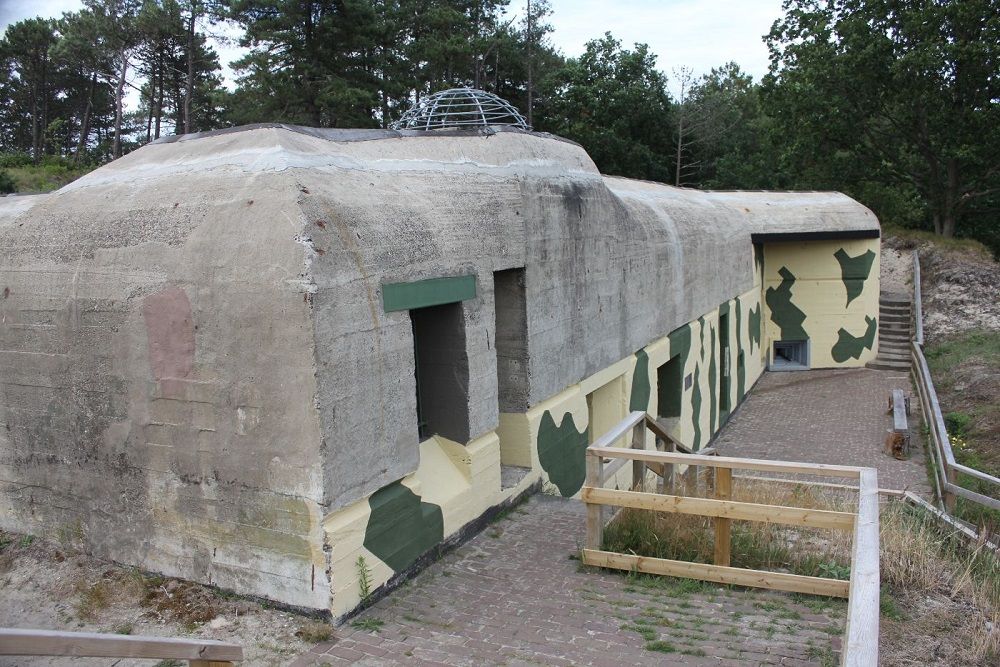
Regelbau L487, known as Bertha, was a Luftwaffe command bunker for radar-data evaluation and night-fighter direction. It was not simply a shelter next to a radar antenna. Its role was to collect, process and communicate information about the air situation so that the night-fighter control system could direct aircraft and coordinate with other air-defence units.

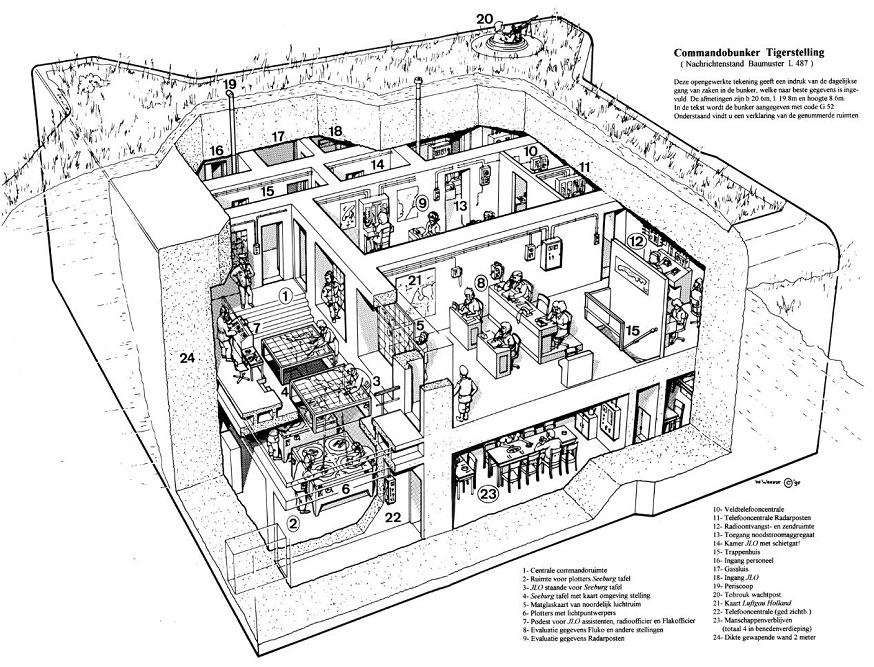
The surviving Bertha at Radarposition Tiger on Terschelling is unusually well documented. The TracesOfWar site record, drawing on information from Stichting Bunkerbehoud Terschelling, describes a two-storey bunker with around twenty rooms, crew accommodation, ventilation equipment, transformer space, a telephone exchange and emergency power generation. It gives the Terschelling example as approximately twenty metres by twenty metres and records more than thirty specialist personnel working and living in the bunker. These details describe that particular installation and should not be taken as dimensions for every L487. [9]

The internal arrangement reveals an operational workplace: radio rooms and communications functions, radar-data evaluation and plotting, staff spaces and the services needed to sustain continuous work. The bunker’s large concrete mass protected people and sensitive equipment, while the multiple rooms allowed information to be handled and transmitted without relying on one exposed position. It formed part of a larger radar position, not an isolated fortification.

At Terschelling, the command bunker is now interpreted as part of a museum site. Other L487 examples were built elsewhere in the Netherlands, Denmark and on Helgoland. The surviving structures demonstrate how a standard model could be adapted to a larger radar-control network while retaining the core functions of a protected command centre.

World War II German RegeLbau L487 bunker photograph, image indexed under this Regelbau designation; exact location and date are not supplied.
RegeLbau L487 · image 01. The supplied index gives this type label but does not record the original photographer, date or site. View pin ↗
World War II German RegeLbau L487 bunker photograph, image indexed under this Regelbau designation; exact location and date are not supplied.
RegeLbau L487 · image 02. The supplied index gives this type label but does not record the original photographer, date or site. View pin ↗
World War II German RegeLbau L487 bunker photograph, image indexed under this Regelbau designation; exact location and date are not supplied.
RegeLbau L487 · image 03. The supplied index gives this type label but does not record the original photographer, date or site. View pin ↗
World War II German RegeLbau L487 bunker photograph, image indexed under this Regelbau designation; exact location and date are not supplied.
RegeLbau L487 · image 04. The supplied index gives this type label but does not record the original photographer, date or site. View pin ↗
World War II German RegeLbau L487 bunker photograph, image indexed under this Regelbau designation; exact location and date are not supplied.
RegeLbau L487 · image 05. The supplied index gives this type label but does not record the original photographer, date or site. View pin ↗
World War II German RegeLbau L487 bunker photograph, image indexed under this Regelbau designation; exact location and date are not supplied.
RegeLbau L487 · image 06. The supplied index gives this type label but does not record the original photographer, date or site. View pin ↗
World War II German RegeLbau L487 bunker photograph, image indexed under this Regelbau designation; exact location and date are not supplied.
RegeLbau L487 · image 07. The supplied index gives this type label but does not record the original photographer, date or site. View pin ↗
World War II German RegeLbau L487 bunker photograph, image indexed under this Regelbau designation; exact location and date are not supplied.
RegeLbau L487 · image 08. The supplied index gives this type label but does not record the original photographer, date or site. View pin ↗
Exterior view of the Regelbau L487 Bertha command bunker at Radarposition Tiger on Terschelling
Documented L487 Bertha at Radarposition Tiger, Terschelling. Photo credits on the source page: Stichting Bunkerbehoud Terschelling and Arie de Vries. Source page ↗
Second exterior view of the Terschelling Regelbau L487 Bertha bunker
Further exterior view of the Terschelling L487. Source-page photo credits are attributed to Stichting Bunkerbehoud Terschelling and Arie de Vries. Source page ↗
Close exterior detail of the Terschelling Regelbau L487 concrete structure
Architectural detail of the L487 exterior. Source-page photo credits: Stichting Bunkerbehoud Terschelling and Arie de Vries. Source page ↗
Entrance and exterior approach at the Terschelling Regelbau L487 bunker
Entrance-side view of the Terschelling command bunker. Source-page photo credits: Stichting Bunkerbehoud Terschelling and Arie de Vries. Source page ↗
Cutaway illustration showing the multi-room interior of the Regelbau L487 Bertha night-fighter control bunker
Cutaway illustration of the Bertha L487 at Terschelling, published with the TracesOfWar site record. It is an interpretive illustration, not an original wartime construction drawing. Source page ↗

Video reference: Regelbau L487. The supplied video collection identifies this clip as L487. Use it as an additional visual reference; the Terschelling site record remains the basis for the specific historical details above.

10 · Kriegsmarine · radar and communications

Regelbau V174: the naval radar bunker with a destroyer column

Regelbau V174 was a Kriegsmarine communications and radar structure. Its German designation, Stand für Funkmeß- und Ortungsgerät mit Zerstörersäule, describes a stand for radio-measuring and locating equipment with a destroyer-type column. Unlike a simple crew shelter, the V174 was designed to support radar equipment and the associated technical and communications functions. The model’s type records identify a gas lock, close-combat room, communications space, machinery room and operating/workshop area. [10]

The Hanstholmregistreringen record for Svinkløv provides a site-specific chronology. It lists a V174 built for the Navy, with the concrete cast beginning in December 1943, completion in April 1944 and handover in June 1944. The same record identifies the FuMO 3 Seetakt radar “Strassburg” as operating from the V174, after having initially been set up in a field configuration. It notes that the radar joined a wider naval radar chain. [6]

This example shows why service and equipment identification matter. Not every V174 carried the same radar set, and not every site used the same height of radar support column. The Svinkløv record documents FuMO 3; other Danish V174 installations were associated with different radar equipment. The building was one node in a network of maritime observation and reporting, with telephone and radio links connecting the stations to command facilities.

In strategic terms, the V174 extended naval awareness beyond the view available from an ordinary lookout. Its importance lay in the information it supplied to coastal artillery observation and naval command, rather than in direct firepower. The concrete bunker, raised radar installation and communications links formed a single technical system.

World War II German Regelbau V174 bunker photograph, image indexed under this Regelbau designation; exact location and date are not supplied.
Regelbau V174 · image 01. The supplied index gives this type label but does not record the original photographer, date or site. View pin ↗
World War II German Regelbau V174 bunker photograph, image indexed under this Regelbau designation; exact location and date are not supplied.
Regelbau V174 · image 02. The supplied index gives this type label but does not record the original photographer, date or site. View pin ↗
World War II German Regelbau V174 bunker photograph, image indexed under this Regelbau designation; exact location and date are not supplied.
Regelbau V174 · image 03. The supplied index gives this type label but does not record the original photographer, date or site. View pin ↗
World War II German Regelbau V174 bunker photograph, image indexed under this Regelbau designation; exact location and date are not supplied.
Regelbau V174 · image 04. The supplied index gives this type label but does not record the original photographer, date or site. View pin ↗
World War II German Regelbau V174 bunker photograph, image indexed under this Regelbau designation; exact location and date are not supplied.
Regelbau V174 · image 05. The supplied index gives this type label but does not record the original photographer, date or site. View pin ↗
World War II German Regelbau V174 bunker photograph, image indexed under this Regelbau designation; exact location and date are not supplied.
Regelbau V174 · image 06. The supplied index gives this type label but does not record the original photographer, date or site. View pin ↗
World War II German Regelbau V174 bunker photograph, image indexed under this Regelbau designation; exact location and date are not supplied.
Regelbau V174 · image 07. The supplied index gives this type label but does not record the original photographer, date or site. View pin ↗
World War II German Regelbau V174 bunker photograph, image indexed under this Regelbau designation; exact location and date are not supplied.
Regelbau V174 · image 08. The supplied index gives this type label but does not record the original photographer, date or site. View pin ↗
Historical photograph of the FuMO 3 naval radar installation associated with the V174 at Svinkløv
Historical FuMO 3 image reproduced by Hanstholmregistreringen (MCH 3362). The site record identifies the radar as part of the Svinkløv V174 installation. Source and context ↗
Close-up historical photograph of the FuMO 3 radar equipment at the Svinkløv naval radar position
Close-up archival view of the FuMO 3 set, reproduced as MCH 3363 on Hanstholmregistreringen. Source and context ↗
Site drawing and plan of the Regelbau V174 radar bunker at Svinkløv
Site plan and elevation reproduced by Hanstholmregistreringen for the Svinkløv V174. Source ↗
11 · Kriegsmarine · ammunition logistics

Regelbau M145: the ammunition depot behind the naval guns

Regelbau M145 was a Kriegsmarine ammunition replenishment depot for 12.7–17 cm ammunition, described in German as Munitionsauffüllraum für 12,7–17 cm Munition. It was a logistics bunker, not a gun position. Its purpose was to store and protect ammunition that had to be moved safely from the magazine to a coastal battery’s weapons. A gun battery depended on a reliable ammunition supply as much as it depended on its observation and command posts.

The M145 plan separates different ammunition components into designated spaces. A published plan reproduced by the Atlantvolden project identifies a handling area and separate storage for shells, cartridges and fuzes. This separation is important: artillery ammunition was not a single interchangeable item. The projectile, propelling charge and fuze had distinct handling and storage requirements, and the magazine arrangement needed to support controlled movement between them. [13]

The technical model register classifies the M145 as a naval ammunition bunker and dates its design release to the third quarter of 1942. It records six examples in Denmark. [12] A location plan for the Bangsbo Fort position near Frederikshavn also lists one M145 alongside other naval ammunition and weapons structures, placing the depot within a wider battery complex rather than treating it as a standalone installation. [14]

The M145’s architecture was shaped by safe storage, access and handling. Its protective concrete shell mattered, but the internal division of ammunition was the key operational feature. The bunker sustained the guns without needing to house them.

World War II German Regelbau M145 bunker photograph, image indexed under this Regelbau designation; exact location and date are not supplied.
Regelbau M145 · image 01. The supplied index gives this type label but does not record the original photographer, date or site. View pin ↗
World War II German Regelbau M145 bunker photograph, image indexed under this Regelbau designation; exact location and date are not supplied.
Regelbau M145 · image 02. The supplied index gives this type label but does not record the original photographer, date or site. View pin ↗
World War II German Regelbau M145 bunker photograph, image indexed under this Regelbau designation; exact location and date are not supplied.
Regelbau M145 · image 03. The supplied index gives this type label but does not record the original photographer, date or site. View pin ↗
World War II German Regelbau M145 bunker photograph, image indexed under this Regelbau designation; exact location and date are not supplied.
Regelbau M145 · image 04. The supplied index gives this type label but does not record the original photographer, date or site. View pin ↗
World War II German Regelbau M145 bunker photograph, image indexed under this Regelbau designation; exact location and date are not supplied.
Regelbau M145 · image 05. The supplied index gives this type label but does not record the original photographer, date or site. View pin ↗
World War II German Regelbau M145 bunker photograph, image indexed under this Regelbau designation; exact location and date are not supplied.
Regelbau M145 · image 06. The supplied index gives this type label but does not record the original photographer, date or site. View pin ↗
World War II German Regelbau M145 bunker photograph, image indexed under this Regelbau designation; exact location and date are not supplied.
Regelbau M145 · image 07. The supplied index gives this type label but does not record the original photographer, date or site. View pin ↗
World War II German Regelbau M145 bunker photograph, image indexed under this Regelbau designation; exact location and date are not supplied.
Regelbau M145 · image 08. The supplied index gives this type label but does not record the original photographer, date or site. View pin ↗
Plan of the Regelbau M145 naval ammunition bunker showing separate areas for shells, cartridges and fuzes
Technical plan of the M145 ammunition depot reproduced by the Atlantvolden project. The diagram labels the handling area and separate stores for shells, cartridges and fuzes. Source and Bangsbo Fort context ↗
12 · Kriegsmarine · coastal artillery observation

Regelbau S449: the measuring post that helped naval guns find their range

Regelbau S449 was a Peilstand, a bearing or measuring post for medium and heavy coastal batteries. It was an observation and measurement facility, not a gun casemate. Coastal artillery needed to establish a target’s position at sea. In the system described for Bulbjerg, two observation posts stood at a known distance from one another; bearings from both posts could be used to calculate the target’s range by triangulation. The S449 provided a protected observation point within that wider measuring system. [7]

The Bulbjerg-Vust site history explains that the Kriegsmarine established a measuring post on the high ground at Bulbjerg, east of the heavy guns at Hanstholm. Visibility was an obvious limitation, especially at night or in poor weather. In 1944 a Würzburg Riese radar was added to the wider position, while the S449 bunker provided the observation function. It is important not to describe the radar as if it were housed inside the S449: the radar and the measuring bunker were distinct elements of the site. [7]

Hanstholmregistreringen documents a second S449 at Svinkløv, where it was registered as a naval measuring post associated with the Hanstholm battery. The record gives construction dates from July to September 1943 and identifies the Svinkløv and Bulbjerg posts as two of the observation bunkers serving the P1/P2 measuring arrangement. It also includes photographs of the exposed observation slit and entrance, along with a local plan sketch. [6]

The S449 demonstrates that coastal artillery depended on more than the range of its guns. Measurement, observation and communication were essential to accurate fire. Its small, specialised bunker was part of the command-and-control architecture that made a heavy battery function.

World War II German Regelbau S449 bunker photograph, image indexed under this Regelbau designation; exact location and date are not supplied.
Regelbau S449 · image 01. The supplied index gives this type label but does not record the original photographer, date or site. View pin ↗
World War II German Regelbau S449 bunker photograph, image indexed under this Regelbau designation; exact location and date are not supplied.
Regelbau S449 · image 02. The supplied index gives this type label but does not record the original photographer, date or site. View pin ↗
World War II German Regelbau S449 bunker photograph, image indexed under this Regelbau designation; exact location and date are not supplied.
Regelbau S449 · image 03. The supplied index gives this type label but does not record the original photographer, date or site. View pin ↗
World War II German Regelbau S449 bunker photograph, image indexed under this Regelbau designation; exact location and date are not supplied.
Regelbau S449 · image 04. The supplied index gives this type label but does not record the original photographer, date or site. View pin ↗
World War II German Regelbau S449 bunker photograph, image indexed under this Regelbau designation; exact location and date are not supplied.
Regelbau S449 · image 05. The supplied index gives this type label but does not record the original photographer, date or site. View pin ↗
World War II German Regelbau S449 bunker photograph, image indexed under this Regelbau designation; exact location and date are not supplied.
Regelbau S449 · image 06. The supplied index gives this type label but does not record the original photographer, date or site. View pin ↗
World War II German Regelbau S449 bunker photograph, image indexed under this Regelbau designation; exact location and date are not supplied.
Regelbau S449 · image 07. The supplied index gives this type label but does not record the original photographer, date or site. View pin ↗
World War II German Regelbau S449 bunker photograph, image indexed under this Regelbau designation; exact location and date are not supplied.
Regelbau S449 · image 08. The supplied index gives this type label but does not record the original photographer, date or site. View pin ↗
Entrance to the Regelbau S449 observation and measuring bunker at Svinkløv
Entrance of the S449 at Svinkløv, photographed by Jørgen Lumbye in May 2011. Source and site record ↗
Local ground-plan sketch of the Regelbau S449 measuring bunker at Svinkløv
Local ground-plan sketch for the Svinkløv S449, reproduced by Hanstholmregistreringen. It is a site record, not a substitute for the complete original standard drawing. Source ↗

Video reference: Regelbau S449. The supplied video collection labels this clip as S449. It is a relevant visual reference for the measuring-post type; verify the depicted site before attaching a precise location or date.

Across the system · comparison

How the twelve bunker types fit together

The model numbers make more sense when their functions are compared. The Army designs in this selection range from crew shelters to observation, command, close-defence and medical roles. The Luftwaffe examples support night-time illumination and radar operations. The Kriegsmarine designs provide radar communications, ammunition logistics and artillery measurement.

RegelbauServiceDocumented functionPrimary contribution
621HeerTen-person group shelterProtected accommodation
622HeerTwenty-person double group shelterProtected accommodation for a larger group
634HeerSix-embrasure armoured-turret positionClose defence and protected observation
636HeerArmy coastal-battery command postObservation, plotting and fire-control communications
639HeerLarge medical dressing stationMedical support
666HeerInfantry observation post with small cupolaObservation and reporting
L411ALuftwaffe60 cm anti-aircraft searchlight shelterNight-time illumination support
L480LuftwaffeWassermann S radar shelterRadar warning and communications
L487LuftwaffeBertha radar evaluation and night-fighter controlAir picture processing and command
V174KriegsmarineRadar and locating-equipment standNaval detection and reporting
M145Kriegsmarine12.7–17 cm ammunition depotNaval artillery ammunition supply
S449KriegsmarineMeasuring post for medium/heavy batteriesTarget bearings and range measurement
Important identification rule: a Regelbau designation identifies a standard design and intended function, not every detail of an individual surviving bunker. Local modifications, incomplete construction, post-war alteration and substitution of equipment can change what is visible today. Where the source material documents a particular example, the text names that site rather than generalising its features to every bunker of the same type.
Conclusion

The Atlantic Wall was a network, not a row of gun bunkers

The twelve designs tell a more complete story of German coastal fortification. A 621 or 622 sheltered the men; a 634 protected a close-defence weapon; a 636 coordinated a battery; a 639 supported medical treatment; and a 666 watched the approaches. The Luftwaffe’s L-series structures supported searchlights, radar and night-fighter control. The Kriegsmarine’s V174, M145 and S449 linked radar, ammunition and artillery measurement to the wider coastal system.

Their concrete forms were shaped by standardised plans, but their military value depended on people, equipment, communications and the landscape around them. Studying each model in its own context avoids the familiar mistake of treating every bunker as the same kind of fortress. It also makes the surviving remains more legible: a small entrance, a turret opening, a power room or a radar mounting plate can reveal a specialised role that the exterior alone may not explain.

These structures are also evidence of occupation and coercion. Their construction took place within a system of German military rule that relied on forced labour in many occupied territories. The architectural record should therefore be read alongside local histories of those who built, guarded, lived near and later dismantled or preserved the fortifications.

Research and documentation

Sources and further reading

The type descriptions combine archival inventories, local heritage records, specialist technical catalogues and documented site histories. The Regelbau.dk/Atlantikwall.dk technical database is used as one reference for model terminology and room schedules, not as the sole authority. Where a specific site offers a stronger historical record, that source is prioritised for the example described.

  1. Nationaal Archief, Netherlands — Archive of the 2nd Engineer Command, Bureau Registration of Defensive Works (“Bunkerarchief”), 2.13.167. The finding aid lists original plan sets for Regelbau 621 (1942–44), 622 (1942–43) and 636 (1943–44), including formwork, reinforcement, ventilation and electrical plans.
  2. Egnshistorisk Forening for Sydthy — Sydthy Årbog 2016. Local-history study of the Agger strongpoint, including the 622 personnel bunkers, 634 armoured turret and 666 observation bunkers.
  3. Egnshistorisk Forening for Sydthy — Sydthy Årbog 2019. Regional historical publication used alongside the archival plan inventories.
  4. Région Bretagne, Inventaire général du patrimoine culturel — Bunker-abri de type 621 pour 10 hommes, Pointe de Bloscon, Roscoff. Heritage inventory linking the surviving structure to post-war French documentation and the type plan.
  5. Monumentenzorg Dordrecht — Bunkers and Tobruks, Stützpunktgruppe Moerdijk. Local heritage record for an individual Regelbau 622 and its documented variation.
  6. Hanstholmregistreringen, research by Jørgen Lumbye — P1 Svinkløv. Site chronology and photo records for V174, S449 and the naval radar installation at Svinkløv.
  7. BattlefieldsWW2 — Stützpunktgruppe Bulbjerg-Vust. Site history of the Bulbjerg measuring post, observation geometry and 1944 radar addition.
  8. BattlefieldsWW2 — Stützpunktgruppe Blåvand. Local site history identifying the coastal battery, its 105 mm guns and command/defensive installations.
  9. TracesOfWar — German Radarposition Tiger, Bertha command bunker, type St. L487, West-Terschelling. Site description and photograph credits from Stichting Bunkerbehoud Terschelling and Arie de Vries.
  10. BunkerArchive — German Fortifications, Regelbau dataset. Cross-reference for standard model names, construction programmes and service branches.
  11. BunkerArchive — Luftwaffe fortifications dataset. Cross-reference for Luftwaffe type designations and radar/searchlight roles; use with archival and site-specific evidence.
  12. Regelbau.dk — Regelbau M145. Technical type record for the Kriegsmarine ammunition depot and its intended ammunition range.
  13. Atlantvolden — M145 technical floor plan. Diagram showing the depot’s ammunition-handling and storage compartments.
  14. Wartraveller — Bangsbo Fort / Pikkerbakken site plan. Local layout map listing an M145 ammunition bunker among the fort’s other Regelbau installations.
  15. Regelbau.dk — Regelbau 639. Technical classification of the 639 as a large Army dressing station; room-level claims are not extended beyond what is documented.
  16. Regelbau.dk — Regelbau L411A. Technical designation for the 60 cm anti-aircraft searchlight shelter.
  17. Regelbau.dk — Regelbau L480. Technical designation for the Wassermann S radar shelter.
  18. Regelbau.dk — Regelbau L487. Model classification and equipment-room notes for the Bertha night-fighter command bunker.

Image provenance: the 96 collection photographs link to their individual Pinterest pins. The supplied JSON includes image URLs, dimensions, pin IDs and type tags, but it does not include original photographer names, publication dates, rights status or confirmed site locations. Additional L487 images are credited on the linked TracesOfWar record; the V174 and S449 supplementary photographs and drawings are credited on Hanstholmregistreringen. Confirm image permissions before commercial republication. No unverified weapon, location or interior detail should be inferred from a type label alone.

Back to top ↑

Comments

Popular posts from this blog

From Hidden Command Posts to Armoured Turrets: 10 Regelbau Bunkers of the Atlantic Wall

10 German Regelbau Bunkers That Reveal the Engineering Behind Hitler’s Atlantic Wall

The Hidden Roles of 10 German Regelbau Bunkers Along the Atlantic Wall